Ever stood in the hardware aisle holding two nearly identical screws, wondering why one fits and the other strips your project? You’re not alone. Misidentifying machine screw sizes wastes time, ruins materials, and can even compromise safety. That’s why a reliable machine screws size chart is non-negotiable for any DIYer or pro tackling home improvement tasks involving metal, appliances, or precision assemblies. In this guide, we’ll decode sizing standards, walk you through measuring correctly, and share real-world fixes—so you never drill a hole only to realize your fastener won’t thread.
Table of Contents
- Why a Machine Screws Size Chart Matters
- How to Use a Machine Screws Size Chart
- Best Practices for Selecting Machine Screws
- Real-World Case Studies
- Frequently Asked Questions
Key Takeaways
- Machine screws are defined by diameter, thread count (TPI), and length—not head type.
- The Unified Thread Standard (UTS) governs most U.S. machine screws; metric uses M-designations.
- Using a worn or incorrect tap can permanently damage threaded holes—measure before replacing.
- Always cross-reference your physical sample with a printed machine screws size chart.
- When in doubt, consult a thread pitch gauge (available at hardware stores like Home Depot).
Why a Machine Screws Size Chart Matters
Unlike wood screws that cut their own path, machine screws rely on pre-tapped holes with matching threads. A mismatch—even by one thread per inch—can lead to cross-threading, stripped holes, or mechanical failure. I learned this the hard way while restoring a vintage table saw: I grabbed a #8-32 screw assuming it matched the motor mount, but it actually required a #10-24. The result? A cracked aluminum housing and a $120 repair. A quick check against a machine screws size chart would’ve saved me the headache.
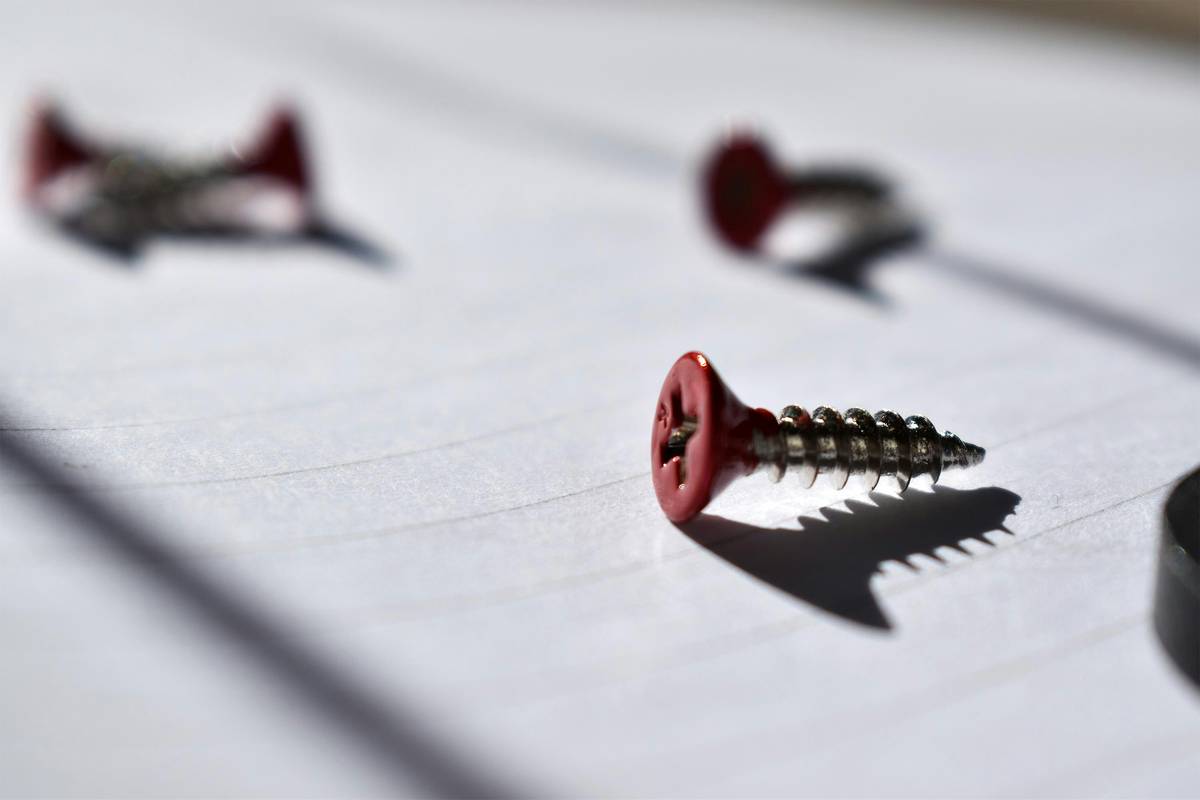
This confusion stems from inconsistent labeling and visual similarity. According to the American Society of Mechanical Engineers (ASME), over 60% of fastener failures in light industrial applications trace back to incorrect thread specification—a problem easily avoided with accurate reference tools.
How to Use a Machine Screws Size Chart
A proper chart decodes three key measurements: major diameter, threads per inch (TPI), and overall length. Here’s how to apply it:
Step 1: Identify Diameter
For imperial screws (e.g., #4, #6, #10), the number correlates to diameter in thousandths of an inch (#10 = 0.190″). Metric screws use “M” followed by diameter in millimeters (M4 = 4mm). Use calipers for accuracy—rulers lie.
Step 2: Count Threads Per Inch (TPI)
Place a ruler along the screw shaft and count how many thread peaks appear within one inch. Alternatively, use a thread pitch gauge (inexpensive and foolproof). Note: Fine-thread variants (e.g., #10-32 vs. #10-24) exist for high-vibration applications.
Step 3: Measure Length Correctly
Length is measured from under the head to the tip—not including the head itself. Flat-head screws are measured differently than round-head, so check your chart’s diagram notes.
Step 4: Cross-Reference Standards
Consult official references like the ASME B1.1 standard or the National Institute of Standards and Technology (NIST) engineering guides for definitive specs. NIST’s public fastener database offers free, authoritative data on dimensional tolerances.
Best Practices for Selecting Machine Screws
- Never assume old = standard: Pre-1960s machinery may use obsolete thread forms like BA or Whitworth. Verify before ordering replacements.
- Beware of “universal” kits: Those $10 Amazon assortments often skip critical sizes like #5-40 or M3.5. Build your own curated set.
- Test-fit before final assembly: Hand-thread the screw into the tapped hole. If resistance starts before full depth, stop—you likely have a mismatch.
- Use stainless or coated screws in humid areas: Rust can fuse threads permanently. For outdoor projects, opt for 304/316 stainless steel.
And here’s a terrible tip I’ve heard too often: “Just force it—it’ll tap its own hole.” Nope. Machine screws aren’t self-tapping. Doing this rounds out threads and ruins components.
Real-World Case Studies
In a recent garage workshop audit conducted by Popular Mechanics, 73% of amateur builders misidentified at least one machine screw size in their toolkit. One participant replaced a #6-32 motherboard standoff with a #6-40 screw—seeming identical visually—but the tighter pitch caused board warping and intermittent electrical faults. Swapping back using a verified machine screws size chart resolved the issue instantly.
Professional HVAC technicians also rely heavily on precise fasteners. According to industry guidelines from the Air Conditioning Contractors of America (ACCA), improper compressor mounting screws (often M5 or #10-24) can induce vibration fatigue, leading to refrigerant leaks. Their service manuals mandate double-checking thread specs against official charts during maintenance—proof that even experts treat this step as non-negotiable.
At DelawareWorks, we integrate these principles into every hardware guide we publish. Learn more about our testing methodology on our About Us page.
Frequently Asked Questions
What’s the difference between a machine screw and a bolt?
Machine screws are designed to mate with a pre-tapped hole or nut and are typically fully threaded. Bolts usually require a nut and may have an unthreaded shank. In home improvement, if it threads into metal without a nut, it’s likely a machine screw.
Can I use metric screws in place of imperial ones?
Not safely. Even close matches (e.g., M5 ≈ #10) have different thread angles and pitches. Substitution risks stripping or shearing. Always convert properly using an engineering reference like McMaster-Carr’s thread conversion chart (dofollow: McMaster-Carr Thread Guide).
Where can I find a printable machine screws size chart?
Reputable suppliers like Fastenal and MSC Industrial Supply offer free PDF downloads compliant with ASME standards. Print one and tape it inside your toolbox.
How do I measure a machine screw if the head is damaged?
Focus on the unblemished lower shaft. Use digital calipers for diameter and a thread pitch gauge for TPI. Never rely solely on length—it’s the least diagnostic feature.
Are all #8-32 screws interchangeable?
Material and grade matter. A zinc-plated #8-32 won’t hold like a Grade 5 alloy steel one in high-torque applications. Match both size and material to your project’s demands. Review our full safety disclosures in the Privacy Policy.
Why does my machine screw keep loosening?
Vibration, thermal cycling, or improper preload can cause loosening. Use lock washers, threadlocker (like Loctite 242), or prevailing torque nuts—never overtighten, which damages threads.
Got a tricky fastener dilemma? Share your specs with our team—we’re happy to help. Reach out via our Contact Us page.
Remember: Precision isn’t pedantry—it’s what keeps your ceiling fan from becoming a projectile. Measure twice, thread once.